Showing posts with label Brown Sugar. Show all posts

Sunday, 14 April 2013

Brownies by Baked Bakery NY


I’ve recently gone on a bit of a brownie craze.
For some reason I’ve started researching brownie recipes from anywhere I can get a hold of them – books, online, magazines, friends/family – and started making tables of ingredients and a list of those which I want to try.  So far I have 20 in my ‘to bake’ list.  I’m not really sure why I’ve begun this but I think it’s partly to do with the fact that I’m looking for a particular taste.  Or maybe a particular sensation.
It’s that intense chocolately hit delivered in a dense and moist morsel.  I think this is my ideal of how a brownie should taste like is, and that is what I’m hoping to find in these recipes I’ve collated. 
I had to make these first as I’d heard so much about them online.  They were really hyped as being one of the best brownies out there and it was also an opportunity to bake something from the book Baked: New Frontiers in Baking by Matt Lewis and Renato Poliafito.  A book I’ve had for quite a while but haven’t baked anything from yet.
I would definitely classify these as a more cakey brownie.  The crumb is moist, dense and squidgy but not so much as to be labelled fudgy and certainly not gooey.  It’s not ‘heavy’ as such, but still satisfies any chocolate craving you might have.   It cuts very well, even when slightly warm and the top developed a nice, thin but crisp crust. 
The recipe specifies to add a tsp of instant espresso powder.  I feel that when the use of coffee in a chocolate dessert is there for the purposes of enhancing the chocolate flavour then that is solely what it should do – enhance the chocolatiness and not impart any obvious flavour of its own.  The amount of coffee flavour here unfortunately does more than play the role of intensifying the chocolate taste.  It comes through strongly enough to be classed as a flavour on its own.  I personally feel that this detracts from the enjoyment of consuming the brownie, which should be rich, dense and full of deep dark chocolate flavour. 
Although I receive a good hit of chocolate, there’s definitely a hint of a mocha vibe going on which I’m not too keen on.  I would decrease the amount of espresso flavour down to at least ½ tsp to see if it is needed.  Apart from that it is a very good brownie which delivers on chocolate taste, denseness and richness with a lovely crisp crust.  I baked them for 25 minutes rather than the specified 30, and am glad I did – I think very slightly under baking them saves the texture from being too cakey and ‘done’.


The Baked Brownie
·         190g/1 ¼ cups plain flour
·         1 tsp salt
·         2 tbsp cocoa powder
·         310g/11oz dark chocolate (60-70% cacao), coarsely chopped
·         225g/1 cup unsalted butter
·         1tsp instant espresso powder
·         300g/1 ½ cups granulated sugar
·         100g/½ cup light brown sugar
·         5 eggs, room temperature
·         2 tsp vanilla extract

Preheat oven to 180C, prepare a 9”x13” baking tin.
Combine the flour, salt and cocoa powder together in a medium bowl.  Melt the chocolate, butter and instant espresso powder on a bain marie (double boiler) until the chocolate and butter are completely melted.
Turn the heat off and add the sugars while the bowl is still sitting on the hot water and whisk until well combined.  Take the bowl from the heat and leave until room temperature before adding in the 3 eggs.  Add in the vanilla and whisk until well combined but don’t overmix at this stage.
Fold the flour mixture into the chocolate mixture with a spatula until just a wee bit of flour mixture can be seen.
Smooth the batter into the baking tin and bake for 30 minutes, rotating the tin halfway through the baking time.  Do not exceed 30 minutes.
Slice when cooled down.
 

Sunday, 7 April 2013

Brown Sugar and Vanilla Bean Cake


Have you ever thought of what your top ten favourite ingredients are?
You know, the ones which you unconsciously stock up on whenever you go out, the ones which you naturally turn to when looking for something to bake, the ones which you bookmark with sticky notes when trawling through a new baking book.   
The ones which stop you in your tracks whenever you are browsing through numerous recipes online.
I’ve always known what I like and what I turn to but didn’t really think to list and plot them down as such.
However, I was recently trawling through amazon’s website for baking books that might look interesting and I came across a book called Baked Elements: the Importance of Being Baked in 10 Favourite Ingredients.  I’ve got the first book by Matt Lewis and Renato Poliafito and unfortunately have not really used it that much despite book marking a few recipes.  Something that I obviously need to rectify soon. But in this third book of theirs, they use the concept of taking their top ten favourite ingredients and making recipes around them.  I think something in my head went Kaching!
I didn’t buy the book because I will need to try out a few recipes from their first book before I do that, but the idea I readily latched on to and set about devising a top ten list of my own.  I kid you not; it took me less than two minutes.  So here it is:

1.   Vanilla Pods/Paste

2.   Cinnamon

3.   Brown Sugar

4.   Spelt Flour

5.   Greek Yoghurt

6.   Lemons

7.   Oil

8.   Cocoa Powder

9.   Yeast

10. Tea

11.  Pears

12. Dark Chocolate

13. Honey

I know, I know there are thirteen here, but I was simply and quickly writing down what I love to work with and didn’t notice at all that the designated number had been exceeded. 
These are in no particular order – in general I like to work with tea just as much as I like to work with vanilla pods or paste.  It’s just that sometimes I have more of a fixation on one ingredient and will use it a lot more than the others, but this fixation will eventually fade and I’ll begin to concentrate on another ingredient more.  It’s a kind of ebb and flow of fixations but the ingredients concerned are always the ones listed.
These favourites are specifically for the sweet baking I do.  I think I would have a completely different list for savoury cooking (a lot more spices for one thing!) or even savoury baking such as bread.  For instance, whereas I’ll always choose lemons in my sweet baking, I absolutely love limes in my savoury cooking.
This cake I made managed to use at least three of my favourite ingredients; brown sugar, spelt flour, oil and vanilla pod and paste (technically four ingredients). 
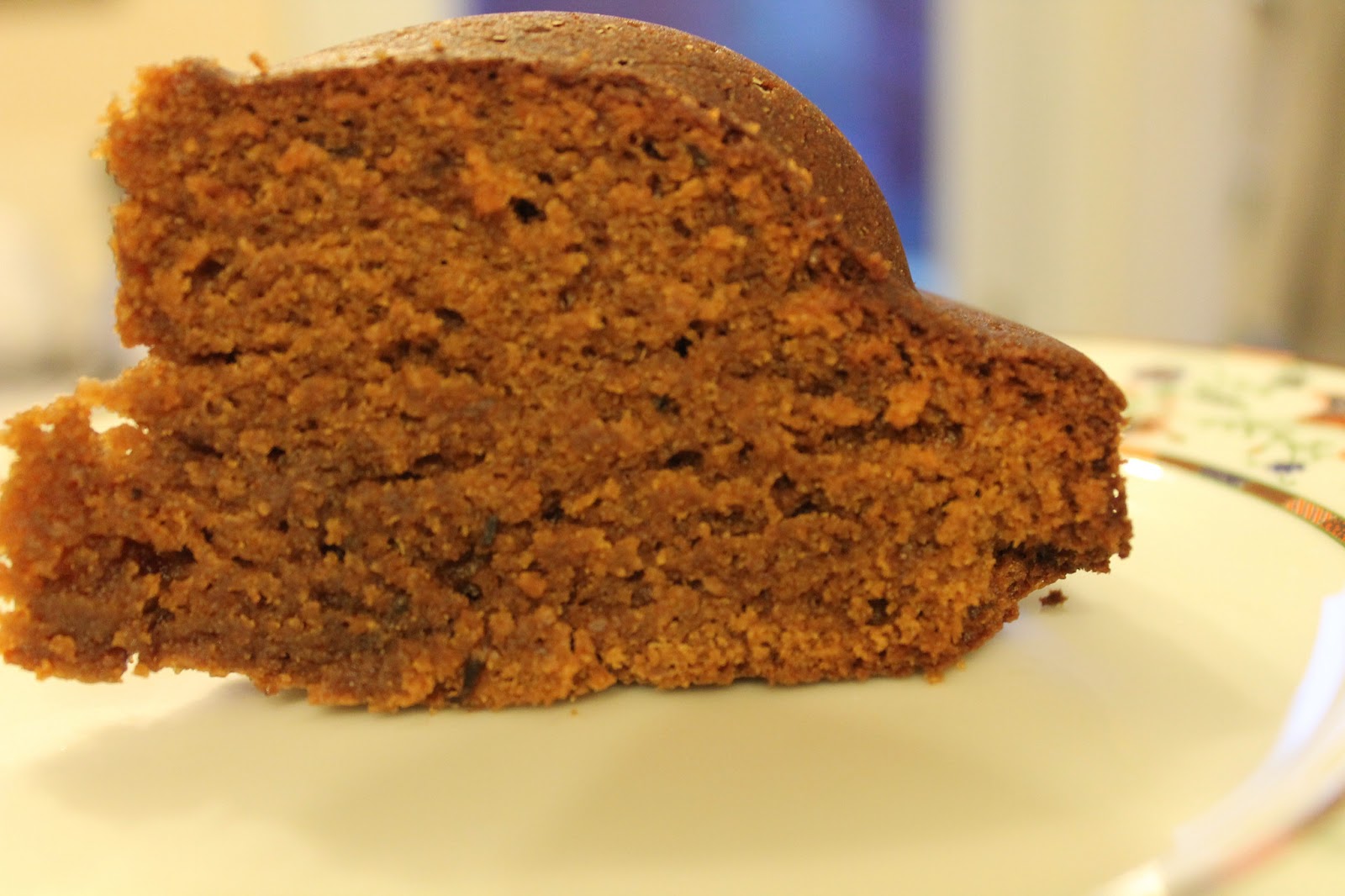
It’s beautifully rich, soft and delicious.  Although I loved the taste of the dark brown sugar in it, it was quite an apparent and obvious taste.  I think for a lot of people, using soft light brown sugar instead would be preferable.

Brown Sugar and Vanilla Bean Cake

·         250g soft dark brown sugar
·         1 egg
·         1tsp vanilla bean paste
·         160ml milk, full fat
·         190g spelt flour
·         1 tsp baking powder
·         1 vanilla pod, dried in oven and grinded down
·         113g oil

Preheat oven to 180C, prepare a 8” round cake tin.
Beat the sugar, egg, vanilla paste and milk together.
Combine the flour and baking powder together and add to the wet ingredients.  Follow with the pulverised vanilla pod.
Lastly, add the oil and mix in well – make sure the oil is well mixed in and does not separate from the batter.
Pour into the tin and bake for 35 minutes then place a foil cap on top and bake for a further 20 minutes (although start checking sooner than this as your oven might be slightly hotter)

Saturday, 2 February 2013

Dundee Cake – Alcohol Free Fruitcake


I wanted this to be the first recipe of my blog.  Back when I was thinking of starting one, I had numerous ideas about which cake recipe I was going to make for my first post.  Extravagant layer cakes were the first option as they had the showstopper appeal.  Then I thought about this Dundee cake as it would be a homage to my city.  I also like fruitcake more than most people.  In the end I decided on my Date, Orange and Pumpkin cake as my first post because those were the ingredients I had at the time and that pretty much describes how I bake most of the time – with what I have to hand, with what is seasonal and with what is easy to acquire for me.  It was also an own recipe and felt it would show how I liked to work with ingredients.
I didn’t forget about the Dundee Cake though and when one of my sister-in-laws requested fruitcake once more (her favourite type of cake) I felt it was the perfect time to make this.
This is the River Cottage recipe I found online and one I felt most comfortable with.  I did of course modify it somewhat – I didn’t have any ground almonds so substituted 100g of spelt flour for 125g ground almonds.  I also omitted the rum and used orange juice.
A Dundee Cake is basically a Christmas style fruitcake with the emphasis on oranges and almonds.  It is also traditionally decorated with blanched almonds on top of the cake and utilises marmalade in the cake batter.  It turns out be much lighter than traditional fruitcakes with a more crumbly texture.  It shouldn’t really contain glace cherries although I have seen some versions containing it online.
For my interpretation of the cake I wanted to really highlight the orange flavour and the almonds.  For your 500g of dried fruit you technically add what you like; sultanas, raisins, dried apricots, even prunes and dates.  But I stuck to golden sultanas and flaked almonds and made up my 500g with these ingredients only.   
For fruitcake I always soak the dried fruit in orange juice and just love the way they plump up over night.  Having absorbed all the liquid they’re like little squishy bursts of orange sweetness when you bite into them.  As well as the juice I added the zest to the batter as well which I felt made a difference.
Although the recipe specified to soak the dried fruit in 75mls of rum, I increased the amount of orange juice to about 100ml (which was how much came out of one orange – it was a particularly large orange).  All of this got absorbed overnight by the dried fruit so just before adding the fruit to the cake batter I added the juice of another orange (about 70-80ml).  Due to the large amount of flour in this recipe I took the chance that the extra liquid will be ok and it was.  You get a nice hit of orange with this cake.
This cake is a lovely light orange flavoured fruitcake that has a beautiful sturdy but soft texture and a surprisingly moreish flavour.

Dundee Cake adapted from Cakes (River Cottage Handbook)

·         500g golden sultanas and flaked almonds
·         170ml orange juice to soak the dried fruit in
·         zest of 2 oranges
·         250g unsalted butter, softened
·         250g light soft brown sugar
·         5 eggs
·         275g plain flour
·         100g spelt flour
·         1 ½ tsp baking powder
·         Pinch of sea salt
·         2 tbsp orange marmalade
·         75g whole blanched almonds

Soak the sultanas in 100ml of orange juice overnight so that all the liquid is absorbed.  When you come to make the cake, add in about 70ml more orange juice.

Preheat oven to 175C gas3, prepare a 9” round cake tin.  Combine the flours, baking powder and salt in a medium bowl.

In a large bowl, beat the butter and the sugar until light and creamy.  Add the eggs, adding 1 tbsp of the flour mix with each to prevent it from curdling.  Beat the egg thoroughly before adding the next one.

Fold in the flour mixture until fully incorporated.  Mix the marmalade into the dried fruit and fold this in along with the flaked almonds. 

Spoon the mixture into the prepared tin, spreading it out evenly with the back of the spoon.  Decorate the top with the blanched almonds placed in concentric circles (I find it easier to start from the middle and work my way out).

Bake in the oven for about 1 ½ hours until a skewer inserted in the centre comes out clean (my cake took 1 hour 40 minutes in total).  Check after 1 hour and, if the surface is getting too brown, lay a foil cap over the top.  Leave to cool in the tin before removing.